
How much local control does a foreign market really need, and when is a country manager justified?
Table of Contents:
What more than 13 years of developing and managing business in Japan for European companies shows about local control, market commitment, and when a country manager is really justified, in Japan or elsewhere.
“We need someone in Japan.”
Over the years, I have heard many versions of this sentence.
Sometimes Japan simply becomes important enough for headquarters to start paying more attention to it. Sometimes there is already some business, but growth has stalled. In other cases, the distributor is not performing as expected, an important relationship is moving too slowly, or headquarters feels it no longer has enough visibility into what is actually happening in the market.
The situations are different, but the conclusion is often the same:
We need someone on the ground.
That sounds logical. And in many cases, it is. But over the years, I have become increasingly interested in another question that often remains unanswered:
What exactly has changed that now makes local control and local ownership necessary?
Country management is more than a job title. It is the local coordination, control and responsibility required to manage a market. That function can be organized in different ways, including through a full-time country manager and local organization or through a fractional country-management model with a defined mandate and scope.
Country management is not an exact science. There is no universally accepted methodology that tells a company exactly how a foreign market should be managed. Even the title “country manager” can mean very different things from one company to another.
In one company, the role is mainly sales. In another, it may include distributor management, marketing, strategy, customer relationships, reporting, business development and almost everything else connected to the market.
That flexibility can be useful. But it also means that many companies design their version of country management as they go, and the decision is often more reactive than it first appears.
Large multinational companies usually have more structure for these decisions: regional strategies, defined budgets, specialist functions and long-term experience across many markets. But more structure does not always mean more clarity.
The recurring question, for companies of any size, is what level of local presence and direct control is actually justified, and in what form.
Three situations commonly lead to this point. I think of these as three triggers for country management.
1. Expansion
A foreign market, such as Japan, becomes a strategic priority. The company is already successful elsewhere and now wants to build a stronger position in this market as well.
2. Acceleration
There is already some business. Perhaps a customer emerged from a trade show, or a distributor has already created a certain level of sales. Headquarters can see that something is working and wants more of it.
3. Repair
There is business, but it is not developing as expected. Growth has stopped. Competition has increased. A partner is underperforming. Problems remain unresolved.
They are very different situations, yet all three can easily lead to the same conclusion:
We need someone locally who can take ownership of this.
Even when that is the right conclusion, things get difficult when the company jumps directly from that realization to the solution.
There are many ways for a company to cover a foreign market.
As an example, let’s think of a European company operating in Japan. Responsibilities may remain at headquarters or with a regional office. The company may also bring in an advisor for specific questions. Alternatively, it can work with an agent or intermediary, sell through a distributor, or hire someone locally for one specific function. At the other end of the spectrum, it can choose to establish full country management and operate a permanent local organization.
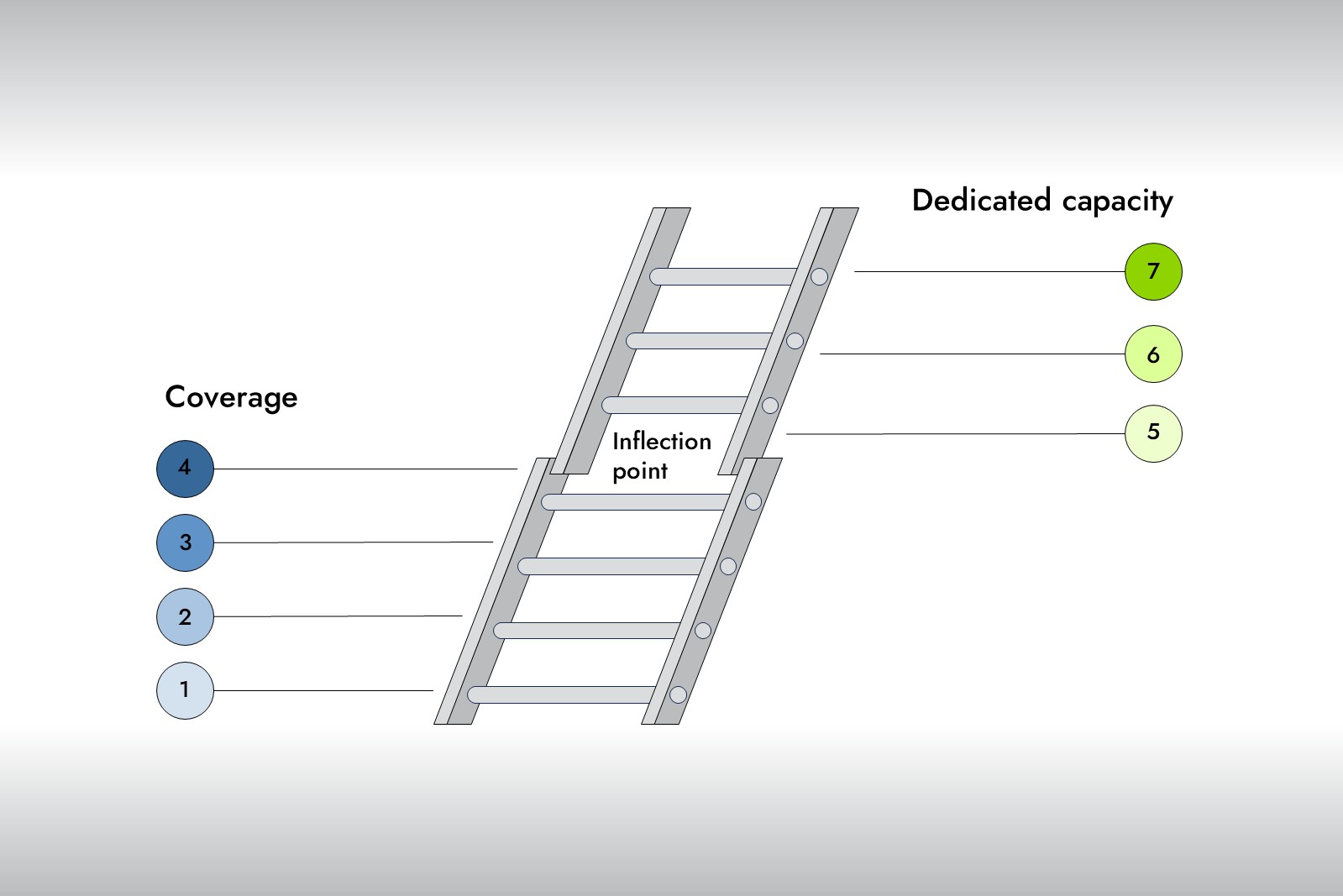
I call this spectrum The Commitment Ladder.
1. HQ- or regional hub-led management
2. Consultants and advisors
3. Agents and intermediaries
4. Distributor-led coverage
5. Local functional hire
6. Fractional country management
7. Full-time country manager / local organization
The ladder does not rank markets by importance or companies by sophistication. One of its main distinctions is the degree of direct control a company has over local execution, and the level of commitment normally required to achieve it.
Direct control does not necessarily require physical presence in the market. Headquarters may retain full decision authority while managing a country remotely. What matters is whether the company has dedicated country-specific capacity whose mandate and priorities it can directly shape.
The ladder is not a prescribed sequence either. A company may combine several models at once, skip certain rungs entirely, or even move backward as circumstances change.
However, an important inflection point lies between rung 4 and rung 5. Up to rung 4, the company typically either manages the market remotely without dedicated country-specific capacity, or relies on independent parties for much of the local execution. From rung 5 onward, it begins establishing dedicated capacity for that market under a defined company mandate, first around a specific function and potentially later across a broader part of the operation.
At this inflection point, the underlying question changes:
from: “Who can cover this market for us?”
to: “What do we now need to control directly in this market?”
Greater direct control normally requires greater commitment: more budget, more management attention, more internal coordination and decisions that become harder to reverse.
At the upper end of the ladder, a full-time country manager with a local organization usually gives headquarters the broadest direct control over local priorities, resources and execution. At the same time, it requires the greatest commitment from the company.
The question shouldn’t be simply:
How far can we go?
But more appropriately:
How far should we go relative to what the business actually requires?
That distinction matters because there is often a gap between what a company puts into a market and what it expects to get back.
Consider a common situation when a company is already working with a distributor in Japan.
The distributor represents multiple products, has its own priorities, and naturally focuses on the opportunities that make the most sense for its business. Headquarters, however, may expect it to continuously build the brand, educate the market, identify new opportunities, report regularly and treat the product as a high priority. In many cases, it also expects the distributor to invest its own time, relationships, people or even financial resources into building the market.
That may be reasonable in some business models, but it should not be an automatic expectation.
The same imbalance frequently appears with an agent, a regional manager responsible for multiple countries, or even a country manager. The structure changes, but the same underlying questions emerge:
I call this the Reciprocity Gap: when a company expects more attention, priority and responsibility from the local partner or person than the resources, support and commitment it puts behind the market itself.
Hiring a country manager does not automatically remove this gap. It can simply move inside the organization.
Hiring a country manager should not be the first decision. Before that, headquarters should clarify at least three things. You can think of this as a simple Country Management Readiness Test: fit, expectations and commitment.
Fit means asking what position the company can realistically build in the market. The question is not simply what it wants to sell, but where there is a credible place for it based on local demand, competition, channels and its own strengths.
Expectations mean being clear about what a local owner actually needs to do. That could be sales, partner management, marketing, business development, strategic planning, or eventually the whole local operation.
Commitment means deciding what the company is prepared to put behind those expectations: budget, time, management attention, decision rights and internal support.
As a practical example, imagine a genuinely fair country manager mandate. Most job descriptions are very specific about what the company expects from the person. There should be equal clarity about what the role has to work with, for example, the available budget and support, its decision rights, and a realistic timeframe for results.
If the expectations are specific while those conditions remain vague, that is a Reciprocity Gap.
The same test applies to every rung. A fractional model, an agent, or a distributor also needs a clear mandate and conditions. A hire is simply the most visible case.
This does not mean that a country manager should receive a complete, fixed strategy. Quite the opposite: helping shape the local strategy is often a core part of the role. The problem is expecting someone to develop and execute that strategy without the budget, decision rights, internal support or time required to make it work.
Headquarters does not need to have all the answers before hiring. But it does need to be clear about the mandate, the conditions behind it, and the level of commitment it is prepared to provide.
Fractional country management is an alternative way to build and manage local market presence. Instead of requiring a full-time country manager, a stand-alone local office, or a separate legal entity, it provides the country-management functions the market needs. This matters when a company needs more direct local control than lighter market-coverage models such as agents, distributors, or occasional advisory support can provide, but the workload, mandate, or business case does not justify a full-time country manager, stand-alone local office, or separate legal entity.
Its functions can include partner development, business development, coordinating local relationships, providing market feedback, moving opportunities forward and solving problems as they arise, with responsibility for defined parts of the local operation.
Fractional country management still needs a clear mandate, defined responsibilities and a time horizon. The mandate should also clearly define the decision-making boundaries of the fractional arrangement and which matters require headquarters approval.
This does not mean expecting one person or function to simply “solve the market.” Nor is the model inherently transitional. It can remain the appropriate structure for as long as the mandate, workload and level of commitment fit. If circumstances change, the company can move to another rung of the Commitment Ladder, just as it can from any other structure.
No single structure fits every company. The right shape is the one where the level of local control, the responsibility expected locally and the commitment behind it match what the market actually requires.
That structure may be a distributor, a local functional specialist, fractional country management or a full-time country manager with a permanent local organization.
This is why hiring a country manager is the second decision. The first is to decide what we are actually trying to build in the market, what needs direct local control and what we are prepared to put behind it.
One last question to ask yourself before you hire:
Do we have a clear mandate and conditions to succeed, or are we trying to define both as we go?

About the author:
Marton Lendvai
CEO & Founder of TOO International
Marton Lendvai is the CEO and founder of TOO International, a Tokyo-based Japan market advisory and business development firm. He helps European food and beverage companies assess whether Japan is commercially realistic, how the market could work, and what should be clarified before investing further in partner search or execution.
His perspective is grounded in more than 20 years of business experience in Japan and over a decade of hands-on brand-side market development with Japanese distributors, buyers, and local partners.
Full bio (see the "Meet Marton" section) Connect on LinkedIn
Why category signals in Japan do not validate market assumptions, positioning, or investment case.
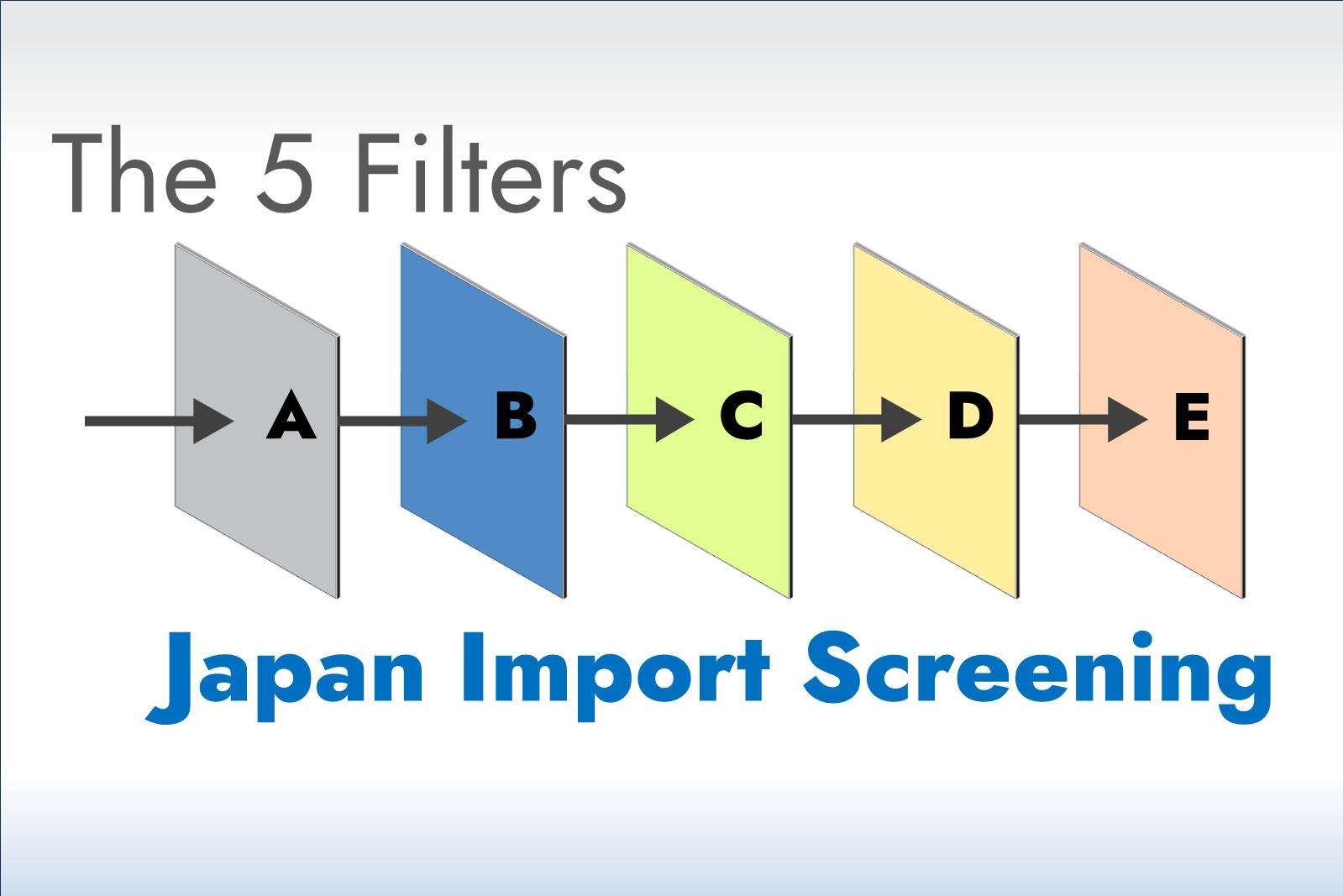
Five internal risk filters that determine whether Western F&B products move forward in Japan.

5-year import data (2020–2024) reveal Japan’s fast-growing drink categories and 2026 outlook.