
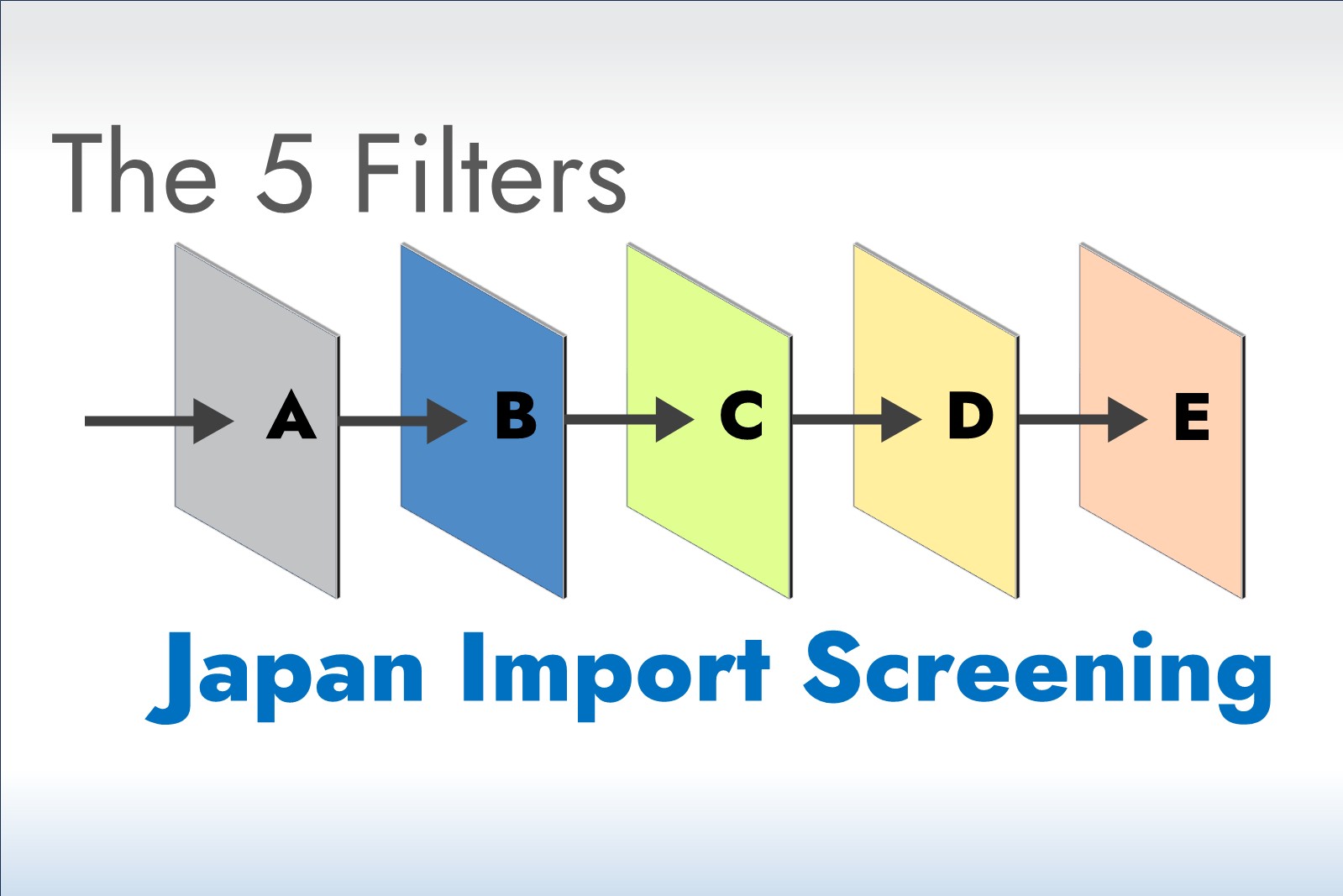
Five internal risk filters that determine whether Western F&B products move forward in Japan.
Table of Contents:
If Japan has been “in discussion” for a year, you are not alone. Many exporters and corporate teams spend 12–18 months in polite negotiations that never convert into business. The issue is rarely effort. It is misreading how decisions are made.
In Japan, a distributor is not your execution engine. It is a risk filter. Until internal filters are cleared, “interest” remains evaluation.
We have seen these filters repeatedly in more than a decade of real Japan market work. They appear across categories, company sizes, and distribution channels. To back this up with direct buyer-side interviews, we conducted structured interviews across four Japanese distribution contexts: a major Japanese food and beverage trading house, a global trading house’s Japanese arm, a mid-sized local trading firm, and a retail-focused importing company.
The interviews reinforced a consistent screening pattern we encounter in practice. Across contexts, buyers described a layered internal evaluation process that determines whether a Western F&B product progresses - or remains indefinitely under review.
The analysis in this article refers specifically to food and beverage products entering Japan through importer and distributor channels. This includes branded products, private label projects, and bulk or ingredient-based trade - although the emphasis of each filter can differ by format. While the examples are F&B-specific, the underlying logic - screening for risk before upside - often applies to other industries and categories where compliance, logistics, and channel economics are material.
Screening mechanisms exist in many international markets. What distinguishes Japan’s F&B distribution environment is the intensity and layering of these filters. Buyers often progress step by step - compliance, economics, operations, trust, strategic fit - while maintaining constructive communication. As a result, dialogue may appear positive even when an internal requirement has not yet been satisfied.
Western teams approach Japan as a sales sequence: introduce, pitch, sample, negotiate, close. Japanese buyers treat the same process as layered risk elimination.
In many Western markets, objections surface early and directly. In Japan’s F&B distribution system, evaluation is layered and internally reviewed. In many cases, one unresolved filter is enough to prevent the discussion from moving forward - even if communication remains polite and positive.
This creates a predictable trap:
Progress depends on understanding which internal requirement has not yet been cleared. This dynamic is explored further in our analysis of why Japan importer discussions stall.
The five filters below form our internal “Five Filters” model for assessing Japan F&B distribution feasibility. They are not the only factors a buyer may consider, and the order can vary by company and category. However, these five appear most consistently in real distribution discussions and buyer-side evaluation.
A. Legal and compliance reality
B. Economic viability in Japan
C. Operational reliability
D. Behavior under stress
E. Strategic and portfolio fit
Discussions advance when the key filters are cleared with evidence. They stall when one remains unresolved.
Before pricing, positioning, or channel strategy, buyers evaluate one question:
Is this compliant and safe to onboard?
Across project experience - reinforced by structured buyer interviews - compliance is one of the earliest and most decisive screening steps. Retail-linked importers and large distributors cannot absorb regulatory ambiguity. The downside risk outweighs upside potential.
What buyers evaluate
Common failure patterns
Evidence of clearance
If this filter is unresolved, subsequent commercial conversations often remain provisional - even if meetings continue.
Global performance does not validate Japan economics.
Japan’s margin stack, channel structure, and price sensitivity are distinct. Buyers evaluate whether the product functions within this architecture - not whether it performs elsewhere.
What buyers evaluate
Common failure patterns
In practice, this is why Japanese importers often start small and why expectations around speed and scaling need to be aligned early, especially regarding how long it can take to get imported F&B onto Japanese shelves.
Evidence of clearance
Until the economics can be justified internally, discussions do not turn into commitment.
Once compliance and economics are plausible, buyers assess operational risk.
Operational reliability signals how much future friction the buyer can expect.
What buyers evaluate
Common failure patterns
Operational ambiguity slows internal alignment - even when external dialogue remains constructive. We have seen similar friction patterns in cases where negotiations with Japanese partners hit the rocks.
Evidence of clearance
Smooth periods do not define partnerships. Complaints do.
Across reinforced buyer discussions, one theme appeared consistently: trust is built under stress.
Buyers repeatedly described how supplier behavior during problems becomes a decisive signal of long-term viability.
What buyers evaluate
Common failure patterns
A common failure pattern looks like this: when informed that packaging arrived damaged, a supplier spends days debating liability before asking what is needed to fix the immediate problem. The financial impact may be limited. The response is what creates concern.
Evidence of clearance
If behavior under stress creates doubt, long-term continuation becomes unlikely - even if earlier filters were cleared.
Even when compliance, economics, and operations align, a structural decision remains:
Does this product belong in our portfolio?
What buyers evaluate
Common failure patterns
Evidence of clearance
If strategic fit is weak, progression stalls regardless of product quality.
Japan F&B distribution operates as a layered screening system. Meetings do not equal momentum. Politeness does not equal validation. Progress occurs only when the critical filters are credibly cleared.
If Filters A-C - compliance, economics, and operational reliability - remain unresolved, the situation is not a distribution opportunity. It is an extended evaluation phase consuming time and internal resources.
For operators and investors assessing Japan as a growth market, the relevant metric is not activity. It is whether the filters have been cleared.

About the author:
Marton Lendvai
CEO & Founder of TOO International
Marton Lendvai is the CEO and founder of TOO International, a Tokyo-based Japan market advisory and business development firm. He helps European food and beverage companies assess whether Japan is commercially realistic, how the market could work, and what should be clarified before investing further in partner search or execution.
His perspective is grounded in more than 20 years of business experience in Japan and over a decade of hands-on brand-side market development with Japanese distributors, buyers, and local partners.
Full bio (see the "Meet Marton" section) Connect on LinkedIn
Why category signals in Japan do not validate market assumptions, positioning, or investment case.

5-year import data (2020–2024) reveal Japan’s fast-growing drink categories and 2026 outlook.

Business development tactics to help import F&B brands in Japan prepare for and grow beyond entry.